Natural Henna Based Hair Dye vs Chemical Hair Color: Which One is Better for Healthy Hair?
As consumers become increasingly conscious about the ingredients they apply to their hair, the debate between natural henna based hair dye and chemical hair color has gained significant attention. Whether you are an individual looking for a safer coloring solution or a cosmetic brand searching for premium herbal products, understanding the differences between these two options is essential for making an informed decision.
For decades, chemical hair colors have dominated the global beauty market because they provide quick and long-lasting color. However, growing awareness about harsh ingredients such as ammonia, resorcinol, and para-phenylenediamine (PPD) has encouraged many consumers to explore plant-based alternatives. Natural henna based hair dyes have emerged as one of the fastest-growing segments in the herbal hair care industry because they combine natural coloring with conditioning benefits.
At Shree Overseas Exports, we have worked closely with herbal hair care manufacturers, private label brands, distributors, and international buyers who increasingly prefer botanical formulations that align with modern consumer expectations. This article explains the major differences between natural henna based hair dyes and conventional chemical hair colors while helping businesses and consumers choose the right solution.
If you are exploring herbal hair care manufacturing, you may also find these resources useful: Herbal Hair Color Manufacturer in India, How Herbal Hair Dyes are Manufactured for International Export, PPD Free Black Henna Hair Dye Benefits, Uses & Safety, and Henna Based Hair Dye Manufacturing.
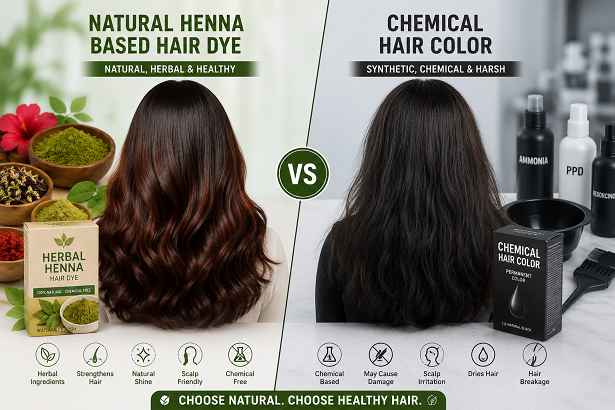
Why More People Are Switching to Natural Henna Based Hair Dye
Today's consumers are no longer selecting hair color based only on appearance. They also evaluate ingredient transparency, scalp compatibility, environmental impact, and long-term hair health. This shift has encouraged cosmetic companies worldwide to introduce herbal alternatives that contain naturally derived ingredients instead of relying solely on synthetic coloring agents.
Unlike conventional chemical hair colors that alter the hair structure using aggressive chemical reactions, natural henna based hair dyes work by coating the hair shaft with plant pigments. This creates a rich natural shade while helping improve the appearance and texture of the hair over time.
Many premium herbal formulations also combine henna with carefully selected botanical ingredients such as indigo powder, amla, bhringraj, hibiscus, aloe vera, brahmi, and other herbs to achieve deeper shades while supporting overall hair care.
For manufacturers and exporters, this growing demand represents an excellent opportunity to supply herbal products that meet international quality expectations while supporting the global movement toward naturally inspired personal care products.
Natural Henna Based Hair Dye vs Chemical Hair Color: A Detailed Comparison
Although both products are designed to color hair, they differ significantly in composition, performance, application, maintenance, and overall user experience. The following comparison highlights the key differences.
| Feature | Natural Henna Based Hair Dye | Chemical Hair Color |
|---|---|---|
| Primary Ingredients | Henna, indigo, botanical herbs and natural plant powders. | Synthetic dyes, ammonia, peroxide, resorcinol and other chemical ingredients. |
| Hair Conditioning | Helps improve the appearance of hair while coloring. | Primarily focuses on color without conditioning benefits. |
| Scalp Experience | Generally preferred by consumers seeking botanical alternatives. | May not be suitable for every individual depending on formulation. |
| Color Appearance | Produces natural-looking shades with gradual enhancement. | Offers a wide range of intense fashion colors. |
| Maintenance | Requires periodic application for continued color richness. | Usually provides longer-lasting color depending on product type. |
| Consumer Preference | Increasing demand among health-conscious buyers. | Still widely used for instant color transformation. |
| Environmental Profile | Often preferred because botanical ingredients are used. | Manufacturing generally involves more synthetic chemicals. |
| Private Label Demand | Rapidly increasing worldwide. | Stable but facing growing competition from herbal alternatives. |
It is important to understand that neither product category is universally better for every user. The ideal choice depends on individual preferences, desired color results, ingredient priorities, and long-term hair care goals.
Understanding How Natural Henna Based Hair Dye Works
Natural henna is obtained from the leaves of Lawsonia inermis, a plant that has been traditionally used for centuries in various cultures for coloring hair, skin, and textiles. The active coloring molecule, known as lawsone, binds naturally to the outer layer of the hair shaft, producing warm reddish-brown tones.
To achieve darker shades, manufacturers often combine premium henna with high-quality indigo powder and selected herbal ingredients. The exact formulation varies depending on the desired color range and intended application.
Unlike chemical oxidation dyes, botanical hair colors gradually develop after application. This slower coloring process often creates softer, more natural-looking results that blend well with existing hair rather than producing an artificial appearance.
Modern manufacturing techniques have also improved the consistency of herbal hair dyes. Professional manufacturers carefully control raw material sourcing, drying, grinding, quality testing, and packaging to ensure each batch delivers reliable performance for domestic and international markets.
How Chemical Hair Colors Produce Permanent Shades
Chemical hair colors use oxidation chemistry to permanently change the natural pigment inside the hair shaft. During application, ingredients such as ammonia or ammonia substitutes help open the hair cuticle, allowing synthetic dye molecules to penetrate deeply into the hair. An oxidizing agent then develops the final shade.
This process offers several advantages, including a wide color palette, excellent gray coverage, and longer-lasting results. Because the pigments are created inside the hair structure, the color generally remains until new hair grows or the color is replaced with another treatment.
However, repeated coloring sessions may require additional hair care practices to maintain smoothness, hydration, and overall appearance. For this reason, many consumers now alternate between chemical coloring and herbal conditioning treatments or transition completely to botanical hair dyes depending on their individual preferences.
Benefits of Choosing Natural Henna Based Hair Dye
The increasing popularity of herbal hair care is driven by several practical advantages. Consumers appreciate products that not only provide color but also align with their preference for naturally inspired beauty routines.
Some of the most recognized benefits include:
- Plant-based ingredients suitable for herbal hair care formulations.
- Natural-looking shades that blend well with existing hair color.
- Improved appearance of hair texture after regular use.
- Growing availability of PPD-free herbal formulations.
- Suitable for private label and organic-inspired cosmetic brands.
- Increasing consumer confidence in ingredient transparency.
- Strong global demand for botanical personal care products.
- Excellent compatibility with herbal wellness product portfolios.
These advantages have encouraged cosmetic manufacturers worldwide to expand their herbal product lines. Export markets in Europe, North America, the Middle East, Australia, and Asia continue to experience increasing demand for premium-quality henna based hair dyes manufactured under strict quality assurance systems.
When Chemical Hair Color May Still Be the Preferred Choice
Despite the remarkable growth of herbal alternatives, chemical hair colors continue to play an important role in professional salons and consumer markets. Their ability to produce dramatic color transformations makes them suitable for individuals seeking platinum blonde shades, vibrant fashion colors, or complete gray coverage within a single application.
Professional hairstylists also appreciate the predictable shade selection offered by modern oxidation color systems. Consumers who frequently experiment with changing hair colors often choose chemical formulations because they provide a broader spectrum of color options compared with botanical ingredients.
Nevertheless, the global trend clearly shows increasing consumer interest in naturally derived formulations, particularly among buyers who prioritize ingredient transparency, sustainability, and long-term hair care.
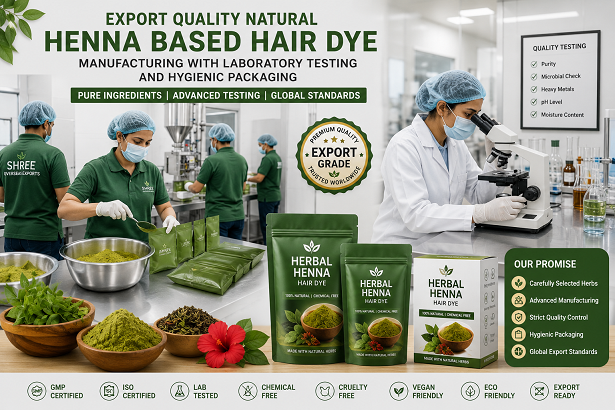
How Premium Natural Henna Based Hair Dyes Are Manufactured
The quality of a natural hair dye depends not only on the botanical ingredients but also on the manufacturing process. Professional manufacturers follow standardized production methods to ensure consistency, safety, and reliable color performance across every batch. International buyers increasingly evaluate suppliers based on their infrastructure, laboratory testing capabilities, traceability systems, and quality documentation.
At every stage of production, maintaining hygiene and protecting the natural properties of botanical ingredients are essential. Premium manufacturers source carefully selected henna leaves, indigo powder, and herbal extracts before processing them under controlled conditions.
| Manufacturing Stage | Purpose | Quality Impact |
|---|---|---|
| Raw Material Selection | Choose premium botanical ingredients. | Improves consistency and purity. |
| Cleaning & Sorting | Remove impurities and foreign matter. | Produces cleaner finished products. |
| Controlled Drying | Preserve natural active compounds. | Maintains color performance. |
| Fine Grinding | Create uniform powder texture. | Improves application and mixing. |
| Quality Testing | Verify safety and consistency. | Supports export compliance. |
| Packaging | Protect product during storage and shipping. | Extends shelf life. |
If you would like to understand the complete manufacturing process in greater detail, we recommend reading our article How Herbal Hair Dyes are Manufactured for International Export.
Choosing the Right Manufacturer for Herbal Hair Colors
Whether you are launching a new cosmetic brand, expanding an existing product line, or sourcing products for export, selecting an experienced manufacturing partner is one of the most important business decisions. A reliable supplier should deliver consistent quality while providing technical support, customized packaging, OEM manufacturing, and complete export documentation.
Before selecting a manufacturer, businesses should evaluate:
- Manufacturing infrastructure and production capacity.
- Experience in herbal hair care manufacturing.
- Availability of private label and OEM services.
- Batch-to-batch consistency.
- Quality control laboratory.
- Certificate of Analysis (COA).
- Technical Data Sheet (TDS).
- Material Safety Data Sheet (MSDS/SDS).
- International packaging standards.
- Export experience across multiple countries.
Businesses interested in expanding their herbal portfolio may also explore our pages on Herbal Hair Colors Manufacturer, PPD Free Black Henna Hair Dye, and Hair Care Products Manufacturer.
Global Demand for Herbal Hair Care Products
Consumer preferences continue shifting toward naturally inspired personal care products. Around the world, buyers increasingly read ingredient labels before making purchasing decisions. Products containing recognizable botanical ingredients are often preferred because they align with clean beauty trends and wellness-focused lifestyles.
This trend has encouraged retailers, salons, distributors, and cosmetic companies to expand their range of herbal hair colors. Premium natural henna based hair dyes are now available through supermarkets, pharmacies, online marketplaces, specialty beauty stores, and professional salon distributors.
Manufacturers capable of maintaining consistent quality, transparent documentation, and export-ready packaging are well positioned to meet this growing international demand.
For additional guidance on quality management systems followed by manufacturers worldwide, businesses can refer to the International Organization for Standardization (ISO).
Frequently Asked Questions (FAQs)
1. Is natural henna based hair dye better than chemical hair color?
Both products have different advantages. Natural henna based hair dye is widely preferred by consumers seeking botanical ingredients and natural-looking shades, while chemical hair colors offer a broader color range and faster dramatic transformations.
2. Does natural henna damage hair?
High-quality henna based hair dyes manufactured from premium botanical ingredients are commonly used as part of herbal hair care routines. Choosing products from trusted manufacturers helps ensure quality and consistency.
3. Can henna cover gray hair?
Henna can provide natural-looking coverage for gray hair. When combined with indigo powder and other herbs, manufacturers can formulate various brown and black shades.
4. Why are PPD-free henna hair dyes becoming popular?
Consumers increasingly look for herbal alternatives with transparent ingredient lists. PPD-free formulations have therefore become one of the fastest-growing segments in the herbal hair care industry.
5. Which industries purchase natural henna based hair dyes?
Cosmetic brands, herbal product companies, private label manufacturers, salons, distributors, exporters, wellness companies, and online retailers are among the major buyers.
6. What documents should an exporter provide?
Professional manufacturers generally provide COA, MSDS/SDS, TDS, product specifications, batch information, and export documentation according to buyer requirements.
7. Can manufacturers customize packaging?
Yes. Many manufacturers offer OEM and private label services with customized pouch sizes, retail packaging, labels, and branding solutions for domestic and international markets.
8. How can I select a reliable henna hair dye manufacturer?
Evaluate manufacturing experience, quality assurance systems, laboratory testing, production capacity, export documentation, packaging capabilities, and customer support before selecting a supplier.
If you want expert help, contact us and we will guide you accordingly.
Author
References
-
International Organization for Standardization (ISO)
https://www.iso.org -
World Health Organization (WHO) – Quality Control Methods for Herbal Materials
https://www.who.int - General botanical quality guidance for herbal cosmetic manufacturing and international quality management practices.
Conclusion
The comparison between natural henna based hair dye and chemical hair color is no longer simply about changing hair color. Today's consumers are equally concerned about ingredient quality, manufacturing transparency, product safety, and long-term hair care. While chemical hair colors continue to serve an important role for individuals seeking bold fashion shades and permanent transformations, natural henna based hair dyes have become the preferred choice for millions of consumers looking for botanical alternatives with naturally inspired formulations.
For cosmetic brands and distributors, this growing demand presents valuable opportunities to introduce premium herbal products that meet evolving market expectations. Working with an experienced manufacturer ensures consistent product quality, export-ready packaging, complete documentation, and dependable supply for domestic and international markets.
As the herbal personal care industry continues to expand, businesses investing in premium-quality botanical products are well positioned for sustainable long-term growth.
Looking for a Trusted Natural Henna Based Hair Dye Manufacturer?
Shree Overseas Exports manufactures premium-quality natural henna based hair dyes, PPD-free herbal hair colors, indigo powder formulations, and customized private label solutions for global cosmetic brands, distributors, wholesalers, and importers. Our products are manufactured under stringent quality control procedures using carefully selected botanical ingredients with complete export documentation and customized packaging options.
Whether you require bulk supply, OEM manufacturing, white-label solutions, or export-quality herbal hair care products, our experienced team is ready to assist your business.